Enterprise Experience Transformation in a Global Financial Institution
Leading AI innovation and legacy modernisation for asset management BU
Scope: AI-assisted workflow + Legacy-to-cloud modernisation Environment: Regulated Financial Services Stage: PoC → Production + Multi-feature rollout Role: Lead UX designer Team: 1 Junior-Mid UX Designer
Context
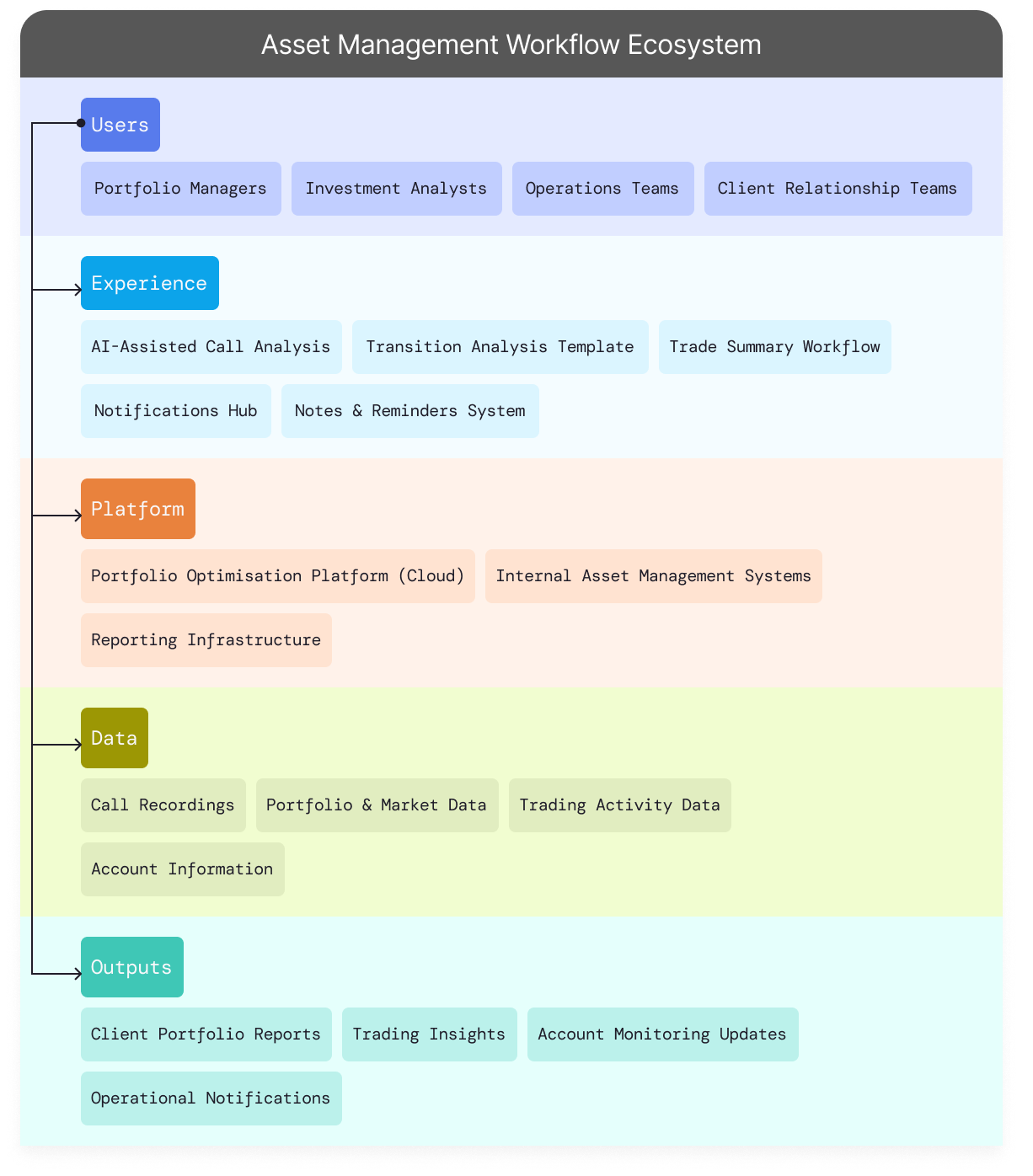
Within a global financial services company, the asset management BU was undergoing transformation for several critical workflows at the same time. The organisation was exploring the use of AI to streamline documentation processes, while also migrating a legacy portfolio optimisation platform to a cloud-based environment.
These changes were taking place in a context where teams managed high volumes of accounts, worked across distributed groups, and operated within strict regulatory and operational frameworks. As a result, even small changes to workflows had the potential to impact productivity, coordination, and risk.
This required more than isolated feature improvements. It called for a structured approach to evolving workflows, aligning stakeholders, and designing experiences that could scale across systems and teams.

Core Challenge
The transformation consisted of two parallel streams:
Innovate responsibly — Introduce AI-assisted workflows without compromising trust or compliance.
Modernise without disruption — Migrate a deeply embedded legacy system while managing user resistance and operational risk.

My Role
Balanced innovation with governance within a regulated enterprise context. I conducted stakeholder interviews across business, product, and technical teams to define the overall experience direction for multiple initiatives. I led the UX strategy for both AI innovation and cloud migration, while balancing innovation with necessary governance within a regulated enterprise context. Furthermore, I mentored and directed a junior designer from concept through high-fidelity design, and collaborated closely with Subject Matter Experts (SMEs) to ensure domain accuracy.
I acted as the bridge between business ambition, technical feasibility, and user workflows.
Transformation Stream 1/2
AI-Assisted Workflow Innovation
The Problem
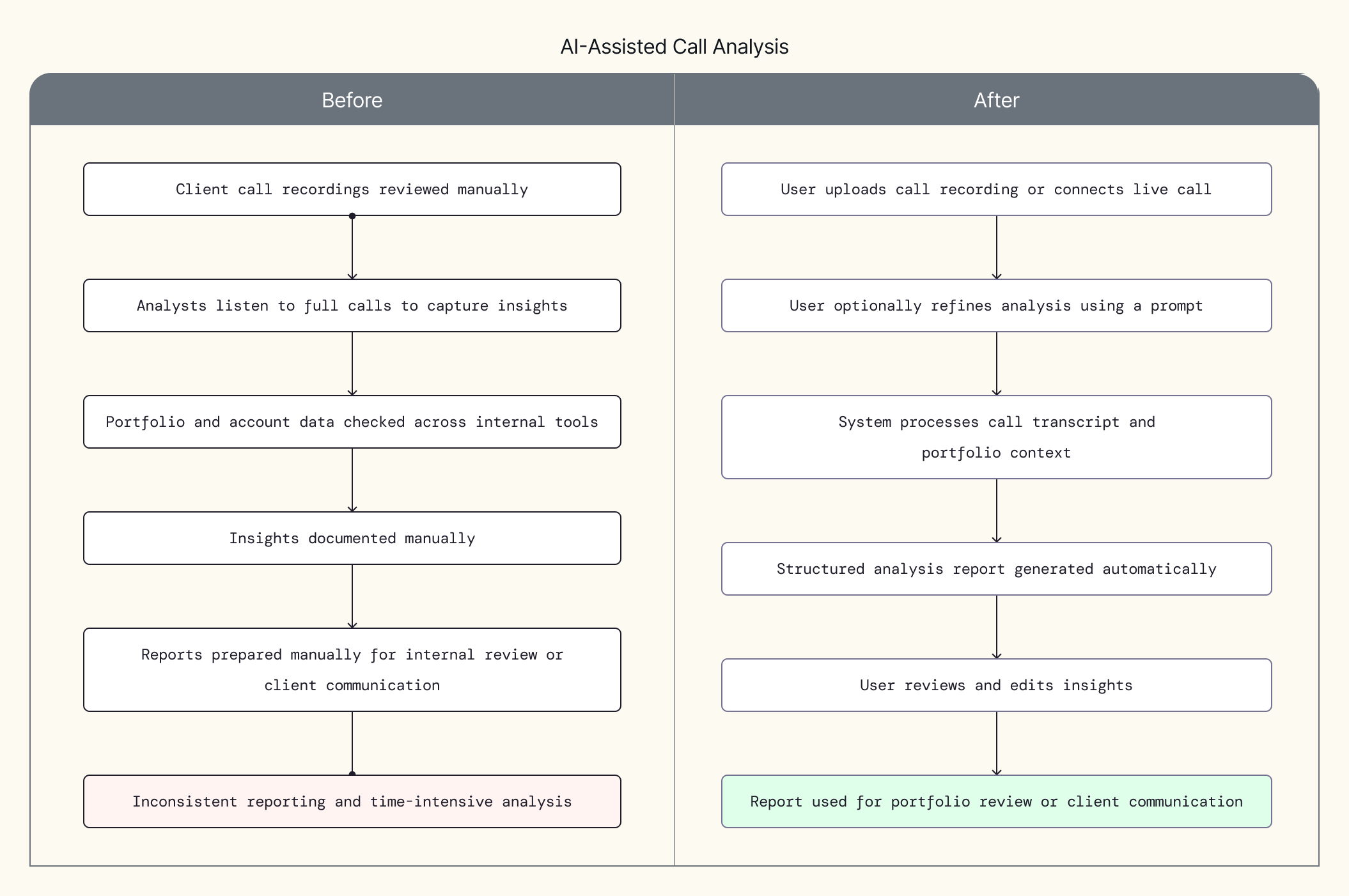
The process of analysing client call recordings and generating portfolio insights was largely manual. Portfolio managers and analysts were required to listen to full recordings, extract relevant information, and structure it into reports, which made the process time-consuming and dependent on individual interpretation. As the volume of client interactions increased, maintaining consistency and efficiency across reporting became increasingly difficult.
The Intervention
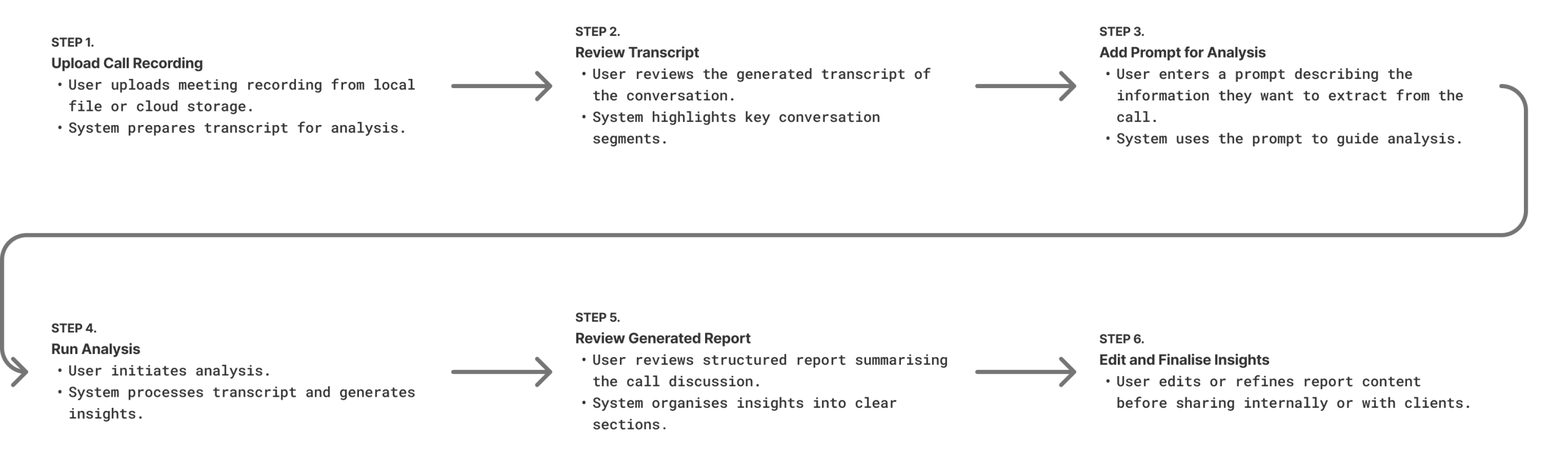
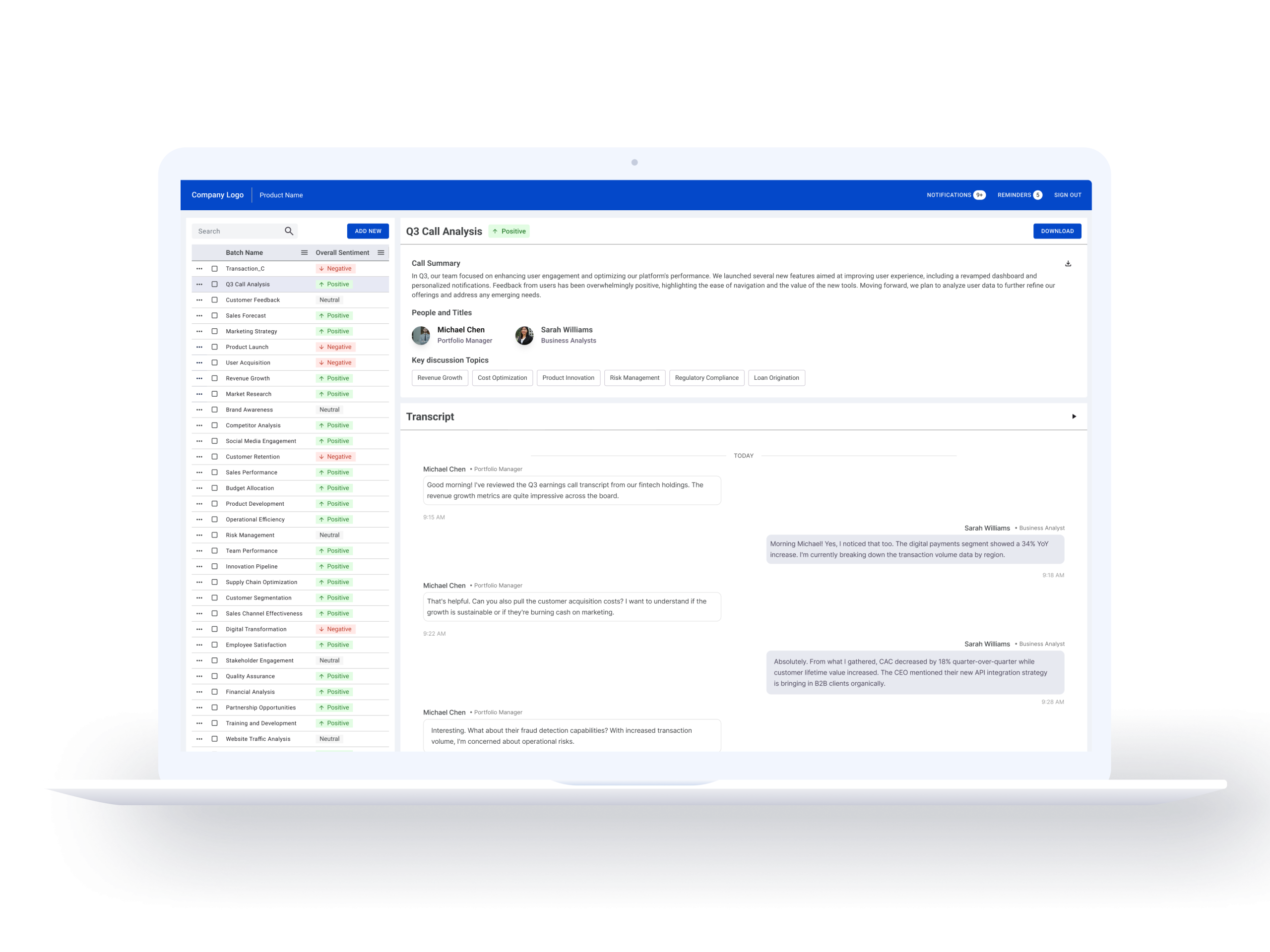
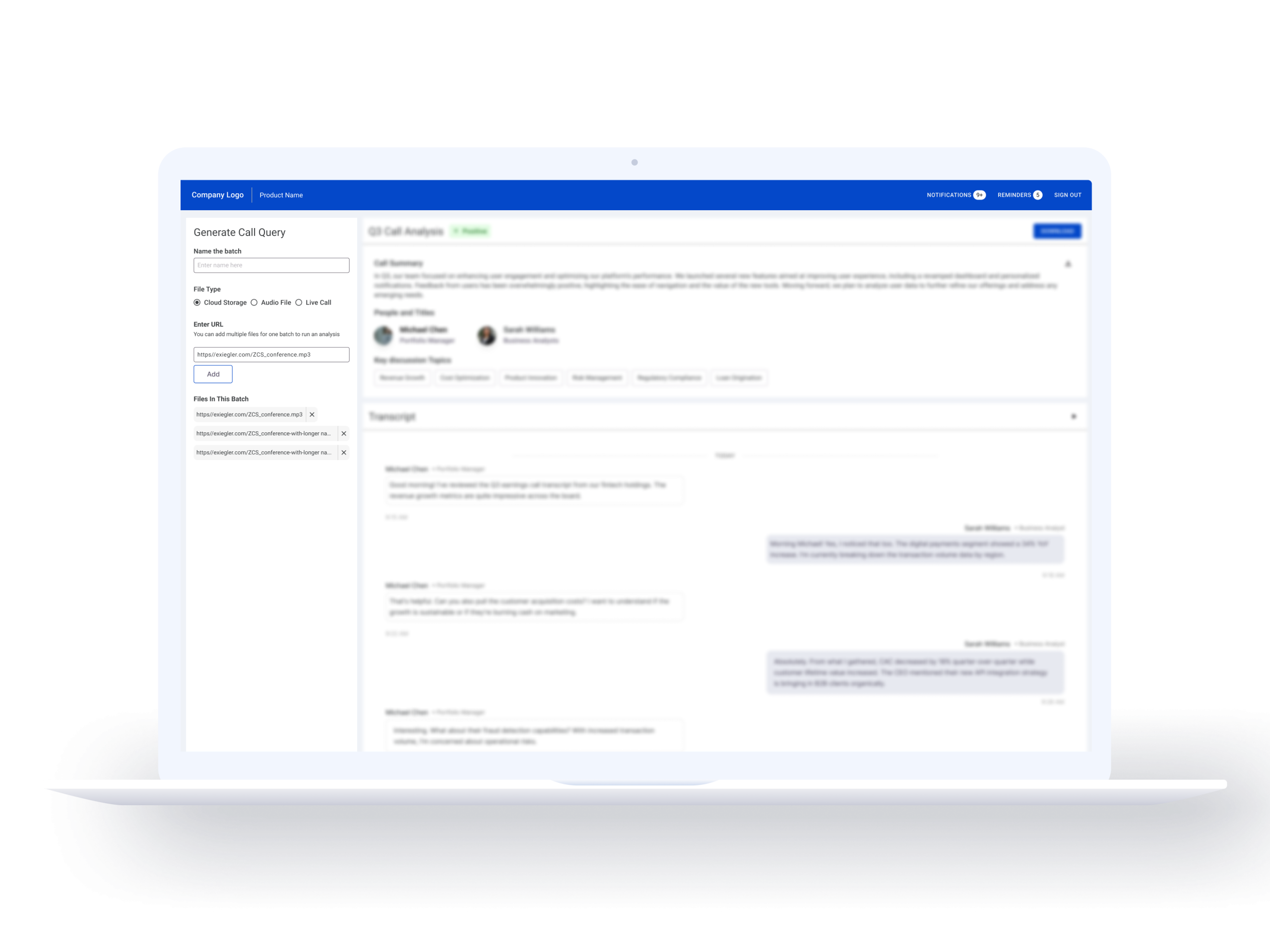
The focus was on augmentation rather than automation. The project involved designing an AI-assisted reporting workflow centred on augmentation rather than full automation. This workflow featured multi-source input (including cloud uploads, audio files, and live calls), configurable prompt input with clear placeholder guidance, and structured output pre-aligned with required reporting standards. A crucial element was the human validation loop integrated before the final report was completed.
The Impact
The AI-assisted reporting redesign workflow yielded several key benefits, including a reduced manual documentation effort and increased reporting consistency. Furthermore, it resulted in an improved turnaround time and strengthened trust in AI-assisted processes, successfully moving the project from a Proof of Concept (PoC) to full production.
Transformation Stream 2/2
Legacy App Modernisation & Workflow Redesign
The Problem
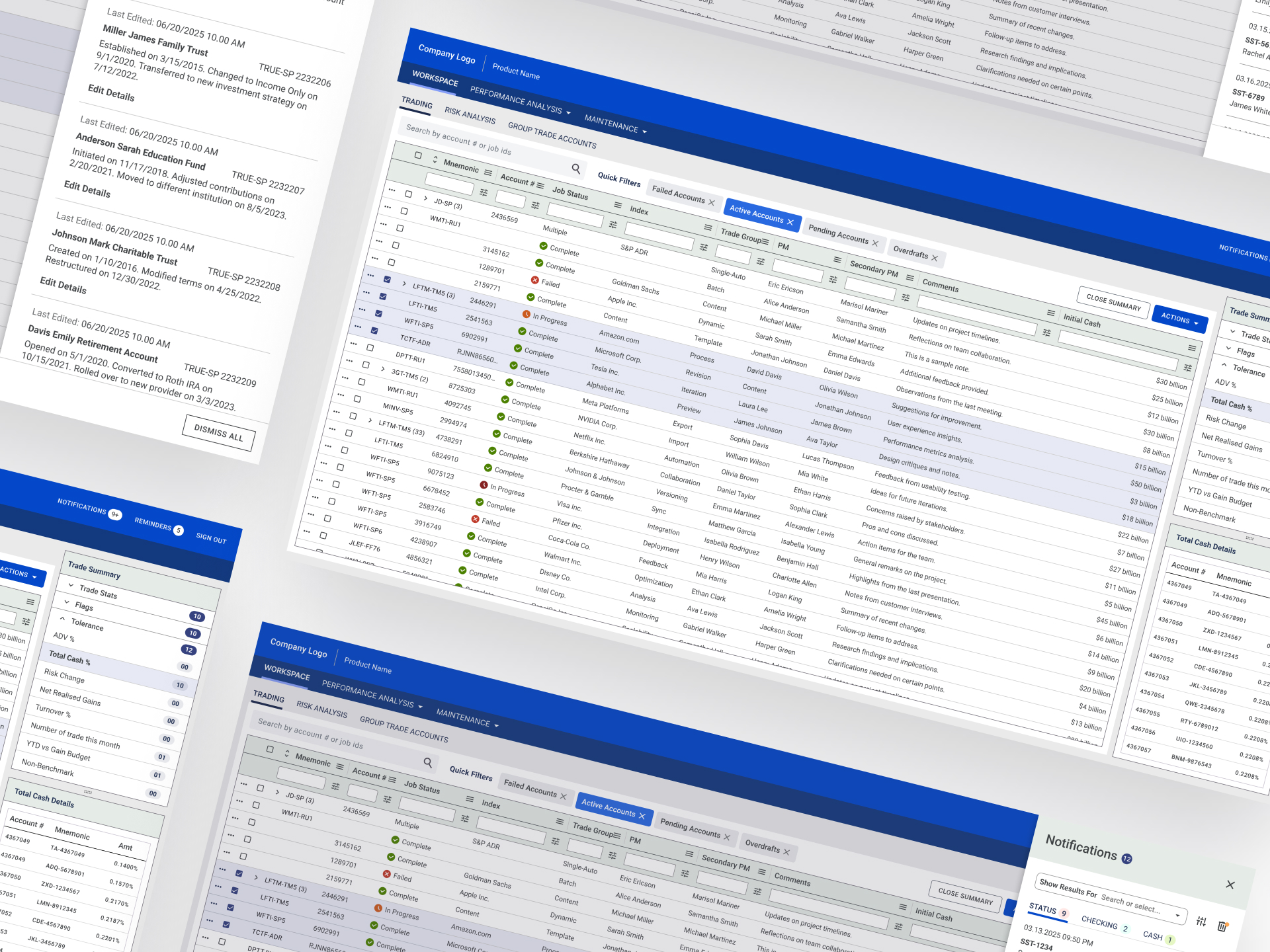
The portfolio optimisation platform was being migrated from a legacy system to a cloud-based environment, introducing changes to workflows and interaction patterns. While these changes aimed to improve the system, they disrupted established user behaviours and created resistance among experienced users. Given the scale of operations and the volume of active accounts, even small disruptions could affect productivity and increase operational risk.
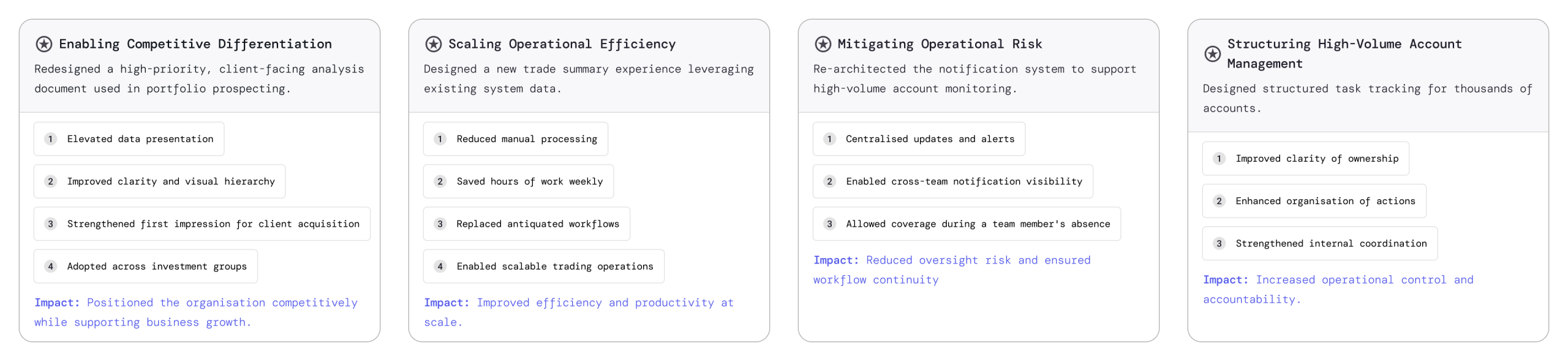
The Strategic Design Interventions
Busniess Validation
“The design refresh has significantly improved our workflow efficiency and presentation quality. Key features support scalability, mitigate operational risk, and elevate our client-facing analysis ahead of competitors. User feedback has been overwhelmingly positive, and multiple initiatives are being developed.”
Senior Stakeholder, Asset Management BU
Organizational Impact
Across both transformation streams, the work contributed to:
Production deployment of AI-assisted workflows
Adoption of multiple high-priority features for development
Reduced manual effort and cognitive load
Increased efficiency across high-volume operations
Strengthened risk mitigation and coverage continuity
Enhanced competitive positioning in client-facing materials